 Image: just-Rascal
Lupin
Source: UH Homebrew (Unchanged from Source)
"We do not keep quiet because we have nothing to say. We keep quiet because the room is still telling us what it needs."
- Therin Long-Watcher, elder of the Arctos clan
Where lupin actually came from is a sore subject. A few sages claim the lupin descended from some old crossing of humans and gnolls. Others insist their roots go back to true werewolves: proper lycanthropes who, generations ago, refused the curse and chose to live among other folk. Lupin themselves shrug at both stories. They'll tell you their ancestors were nomads, that they wandered a long time before they put down roots, and that the lands they finally settled in shaped what each clan became. Most, if not all lupin abhor lycanthropes instinctually, and detest being compared to them at all, let alone having such creatures as ancestors.
Strong Minds, Lean Builds
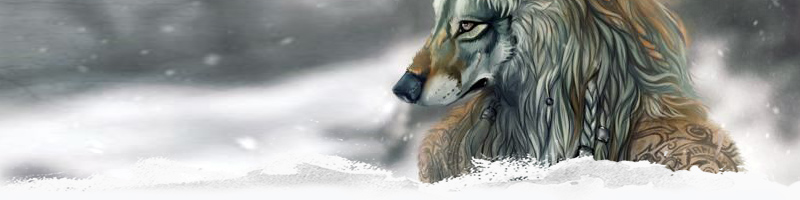
Lupin stand somewhere between five and a half and seven feet tall, with most settling near six. They are not bulky, but rather wiry and strong, with long legs built for distance over sprinting. Their hands are mostly hand-shaped, useful for tools, weapons, and the small craftwork they prize, but their feet keep the digitigrade arch and soft pads of their wolf-blooded ancestors. Wolf-shaped heads sit on long necks, with high-set ears that twitch toward any sound worth listening to. Their coats vary so widely between clans that it's easier to describe a lupin by where they're from than by what they look like. Most coats grey out as a lupin ages, until the elders walk among the young like silvered shadows.
Quiet and Calculating
Lupin are careful with their words. They'll sit through a whole evening's debate before saying anything, and when they finally speak, the rest of the room tends to go still, not out of awe but because experience says it'll be worth hearing. The habit cuts both ways. Sages, scholars, and chartered guilds love a lupin colleague. Loud company sometimes finds them aloof or stuffy, and lupin will admit, with a small wag of the tail, that they're not always wrong about that.
What lupin do not lack is curiosity. They are drawn to puzzles in any form: magic, mathematics, politics, or a strange door at the end of a long hallway. The pursuit of mastery, of any kind, is treated as a worthy life. Lupin who feel they've outgrown the lessons of their home clan are not held back; they're sent off with food and well-wishes, expected to return one day with stories and skills the elders haven't heard yet.
Four Horizons
The lupin of the Sword Coast almost always come from one of four old lineages, each tied to a different stretch of the continent. Long ago, when the clans first split off and went looking for somewhere to belong, four of those journeys took root and held.
The Arctos climbed into the snow-capped peaks of Renardy and built towers of stacked stone in the high passes. They share that range with dwarves and the occasional hill giant, and they've picked up plenty from both: solid masonry, slow conversation, and an iron faith in clan and craft.
The Vulpes drifted east into the small wooded valleys of the Dalelands, where they took up the kindlier arts of trade, music, and gossip. You'll find them running wagons on the trade roads, or sat in the corner of a warm alehouse charming the local bard out of a song.
The Sylvani went deeper still and disappeared into the High Forest. They walk the old paths beside wood elves and shield-rangers, listening for things most folk never learn to hear. When they speak (which is rare) they tend to do it in Elvish.
The Arenis crossed into Anauroch and learned to live where everything wants to kill you. They ride and trade with the Bedine, and have for so many generations that nobody can quite say which culture taught the other to read the stars.
Pack and Patience
Family is the heart of lupin life. A clan is a wide thing. Parents, siblings, cousins, in-laws, fosters, and chosen kin all sit at the same table, and a lupin away from home will work to build something that resembles that warmth in their adventuring company. Pack debts are taken seriously; a lupin who owes you something will repay it tenfold and then act like it cost them nothing.
They'll defend their kin without question, and they almost never raise a blade against another lupin if it can be helped. Ritual and self-defense are the two old exceptions, with a third reserved for kin who have gone over to evil, and even those are treated as a tragedy, not a triumph.
Lupin Names
A lupin's name is a rite of passage, not a thing handed out at birth. Pups are called by short kin-words like Eldest, Youngest, Little Hunter, or Quiet One, until they've grown old enough to bring food back to the clan or stand a real watch. The naming ceremony itself varies between the four lineages, but the principle is the same: an elder gives the new name in front of the assembled clan, and from that moment on, that name belongs to the lupin alone. Lupin names are gender-neutral; their language doesn't bother with the distinction.
Many lupin who travel widely also pick up an epithet, a second name earned through deed, habit, or sheer accident, that tells you what they've been doing since they last sat at the home fire.
Arctos Names: Aelka, Bran, Hrelda, Korr, Rune, Skara, Therin, Tynd, Vesk, Vosk
Vulpes Names: Brann, Faela, Lin, Mira, Nivin, Pell, Quinn, Sosha, Tess, Vellam
Sylvani Names: Aiden, Caelis, Evron, Maerwen, Nymri, Oran, Sabri, Saeloth, Thel
Arenis Names: Ali, Dakir, Halaf, Khered, Nashir, Rashin, Sahara, Tama, Yenis, Yusra
Earned Epithets: the Patient, Long-Watcher, Stormtrack, Thricewounded, of the Open Hand, Snowfoot, Two-Coins, Bookwise
Lupin Traits
Your Lupin character has the following racial Traits. Please note, as per server rules, they must start at a minimum age of: 18.
Age. Lupin reach maturity around 16 and live to about 80.
Alignment. Lupin tend toward good. The Arctos lean lawful, the Vulpes chaotic, and most clans land somewhere on the kinder side of neutral. Evil lupin exist but are rare, and rarely welcomed home.
Size. Lupin range from five and a half to nearly seven feet tall, lean for their height. Your size is Medium.
Speed. Your base walking speed is 30 feet.
Lupine Senses. You have advantage on Wisdom (Perception) checks that rely on hearing or smell.
Bite. Your teeth count as natural melee weapons. On a hit they deal 1d6 piercing damage plus your Strength modifier.
Pack Lore. Every lupin clan keeps long oral traditions, and the youngest are expected to know the old stories cold. You gain proficiency in the History skill.
Languages. You can speak, read, and write Common and one additional language you learned from your homeland or your neighbors. Dwarvish, Elvish, Sylvan, and Halfling are the most common choices. If something else fits your story better, talk it over with your DM.
Subrace. A few subraces of lupin exist below. Choose one of them for your character.
Arctos (Subrace)
Source: UH Homebrew (Unchanged from Source)
Arctos lupin grow up in the high holds of Renardy, where stone keeps and switchback roads cling to the spines of the mountains. Their coats range from white, silver, and steel-grey, often with a darker mask across the eyes. In rare cases they can be a darker gray or stone black, but that is much less common. Their builds are the broadest of any lupin lineage; standing near seven feet and shouldering a load without complaint. Their voices carry, and when one of them lets out a true howl, the whole valley hears about it.
Arctos clans are tight, formal, and slow to admit outsiders, but a guest who has sat at their hearth once is family for life. Mountain hospitality runs strongly in their blood, and dishonor is a heavy insult.
Alignment. Arctos tend toward lawful good or lawful neutral, taking clan duty seriously.
Mountain Howl. As a bonus action, you can let loose a long, ringing howl. A number of creatures of your choice up to your Proficiency Bonus that can hear you within 60 feet must succeed on a Wisdom saving throw (DC 8 + your Proficiency Bonus + your Charisma modifier) or become frightened of you until the end of their next turn. A creature automatically succeeds if it cannot hear you. On a successful save, the creature is immune to this trait for the next 24 hours. You can use this trait a number of times equal to your Proficiency Bonus, and you regain all expended uses when you finish a long rest.
Highland Knack. You gain proficiency in the Survival skill.
Arenis (Subrace)
Source: UH Homebrew (Unchanged from Source)
Arenis lupin are the wolf-folk of Anauroch, lean and sun-bleached, with short silken coats in sand and bone-white. Those of rarer dark-hued coats tend to find themselves on the fringes of society as outcasts; not thrown out altogether, but often avoided as bad omens. Their eyes are usually bright gold, silver, or orange and amber. Long generations on the dunes have given them a kinship with the Bedine that goes deeper than alliance. Arenis ride beside Bedine on long caravans, share their water and their songs, and bury their dead under the same star-charts. They're the most quietly mystical of the lupin clans. They read weather in the wind and stories in the stars, and they can name a stranger's home dune by the way the dust sits in their cloak.
Alignment. Arenis lean true neutral. The desert keeps its own counsel, and so do they.
Desert Hunter. Long stretches under the cold desert nights and bright stars have honed your eyes. You have darkvision out to 60 feet; you can see in dim light within 60 feet as if it were bright light, and in darkness as if it were dim light. You can't make out color in the dark, only shades of grey. You also gain proficiency in the Perception skill.
Sun-Hardened. Your kin have lived where the sun is strongest. You suffer no harm from the effects of extreme heat (DMG p. 110), and you require only half the normal amount of water to avoid exhaustion in arid environments.
Sylvani (Subrace)
Source: UH Homebrew (Unchanged from Source)
Sylvani lupin live in the High Forest, in clearings most outsiders never see. Their coats run to dapple-grey, mossy green-grey, and deep forest brown, colors that disappear in the ground flora. They're tall and lean even by lupin standards, and they walk so quietly that wood elves sometimes forget they're following.
Sylvani clans share a long, easy peace with the elven communities of the High Forest. They've borrowed each other's songs, hunts, and grudges for so many generations that telling the cultures apart is mostly a matter of who carries the bow. Sylvani who leave the forest tend to go on quiet errands: looking for a lost druidic site, walking a young charge to safer ground, or carrying a message no one else could be trusted to deliver.
Alignment. Sylvani tend to be neutral good. They are fierce defenders of the woods, and slow to forgive harm done to them.
Wildwood Magic. You are tuned to the slow magic of the deep forest. You know the Druidcraft cantrip. Starting at 3rd level, you can cast the Detect Magic spell with this trait, without requiring material components. Starting at 5th level, you can also cast the Enhance Ability spell with this trait, without requiring material components. Once you cast Detect Magic or Enhance Ability with this trait, you can't cast that spell with it again until you finish a long rest. You can also cast either of those spells using any spell slots you have of the appropriate level. Wisdom is your spellcasting ability for these spells.
Forest Lore. You gain proficiency in the Nature skill.
Vulpes (Subrace)
Source: UH Homebrew (Unchanged from Source)
Vulpes lupin are the smallest and most foxlike of their kin, with russet, copper, or deep auburn fur, white throats, and dark “socks” down their feet. Their faces are sharper than other lupin's, and their ears stand tall and expressive. They were the first of the wolf-folk to drift out of Renardy, and the Dalelands suited them: small farms, small towns, and a steady hum of trade.
A Vulpes will know everyone's name, even three towns over. They'll also know who owes whom, who's quietly courting whom, and which farmer has the better cider this year. They're not gossips in any cruel way usually, they simply believe a community runs on what its people know about each other.
Alignment. Vulpes tend towards chaotic good. They are fond of personal freedom, clever fixes, and strong cider with close friends.
Vulpine Shape. As an action, you can polymorph into a fox as per the Polymorph spell, and back into your true form as a bonus action. If you are reduced to 0 hit points in this form, you revert back to your true form. Any damage you take in your changed form is transferred over to your true hit points.
Silver Tongue. You gain proficiency in the Persuasion skill.